Original guide MEASUREMENTS & FIT
How to measure a vintage football shirt before buying
A size label is a starting point. Compare measurements taken the same way before choosing a shirt.
To compare the fit of a vintage football shirt, request its pit-to-pit width and length in centimetres, measured flat without stretching. Measure a shirt that already fits you using the same method. The useful comparison is between garments measured at equivalent points: an M, L or XL label alone cannot tell you whether a shirt will fit as you want.
1. Choose your reference shirt
Choose a shirt with a fit you know and a similar intended use: worn on its own, over another layer or displayed. Record what you like about its fit and what you would change. For a gift without a reference garment, leave fit unconfirmed; do not infer it from height or weight alone.
Record label size, stated version and alterations separately. Do not convert every size from an era or brand using a “size up” rule.
2. Agree how to measure width
- Lay the shirt on a flat surface. Arrange the fabric without pulling it, ensuring the front or back is not gathered underneath. Do not force fragile areas flat.
- Measure in a straight line from one underarm junction to the other. Request a photograph showing both ends of the tape and the surrounding shirt.
- If the construction has no clear junction, agree another identifiable point and mark it in the photograph. Do not compare it with a measurement taken at a different height.
The result is the garment’s flat width, not your body’s chest circumference. Doubling it does not create a size recommendation or tell you how much room you will have when moving. Comparing it with your own shirt keeps the measurement meaningful.
3. Define the start and end of the length
One possible method runs from the high shoulder point beside the collar to the bottom edge of the front, excluding the collar itself. Record that route and use it for both shirts. Measuring from the centre of the back neck gives a different reference; do not mix the two methods in one comparison.
If the back hem is longer or the hem is curved, request front and back lengths separately and identify each route. For a raglan sleeve, agree the endpoints before requesting an additional measurement: “sleeve length” alone does not explain where the tape starts.
4. Complete this table before deciding
This blank table is for your purchase; it does not describe our inventory. Name photographs so they can be matched to each measurement and listing.
| Detail and method | Your reference | Candidate | Photo or open question |
|---|---|---|---|
| Size stated on label | ______ | ______ | Readable label: ______ |
| Flat width between underarms | ______ cm | ______ cm | Matching endpoints: ______ |
| Front length, shoulder beside collar → hem | ______ cm | ______ cm | Visible route: ______ |
| Back length, if needed | ______ cm | ______ cm | Agreed route: ______ |
| Another measurement affecting your fit | Method: ______ | ______ cm | Photo: ______ |
Decide which differences are acceptable using garments you know. If you give a range in a sourcing request, explain whether it is essential or a preference. Do not set a universal tolerance for all fabrics and cuts. Keep the original numbers and unit; if you convert inches to centimetres, label the conversion and do not present it as a new measurement.
5. Resolve differences before authorising the purchase
If the description gives one figure and the tape appears to show another, ask the seller to repeat the measurement with the same endpoints visible. Do not simply choose the more convenient figure. “Not measured”, “different starting point” and “unreadable photograph” are different uncertainties and should be recorded separately.
If the measurement cannot be obtained, explicitly decide whether you accept buying with fit unconfirmed. A general manufacturer or shop size chart can guide a search, but cannot replace information about that particular item. A correct measurement does not confirm authenticity, condition or history either.
6. Send a request that can be checked
Copy this message if useful: “To compare the fit, I need the width between the underarms and the length from the shoulder beside the collar to the front hem, in centimetres. Please measure flat without stretching and send photos showing the tape’s endpoints. If you use a different method, explain it. My reference shirt measures [width] and [length] using this route; I am looking for [fit or range]. Mark anything you cannot check as unconfirmed.”
Include that reference in your sourcing request. If you have chosen a listing, provide its measurements and open questions when arranging a purchase from China. To repeat measurements on arrival, agree which points should be checked during inspection.
Add the product line and intended use to measurements
Before comparing sizes, identify the sport, brand and stated product line of each garment. Include a garment you own with the desired fit and say whether you will wear it alone or over layers. A hockey jersey with space for equipment does not provide an automatic size conversion to a basketball or football jersey.
Repeat the same measurement points and record front and back lengths separately when they differ. If the method is missing, request a tape-measure photograph with visible reference points. Other collectors’ fit experiences help frame questions; they do not justify advising everyone to size up or down.
Continue with: Authentic, Replica and reissue.
References informing these questions: NBA Store(页脚注明由 Fanatics 代表 NBA 运营); MLB Shop; Nike.
Additional questions from communities and videos: u/urrax9(原帖);u/mdwsta4(术语讨论). Research used text or captions; archived records do not verify a thread’s current state. These are not site customers, demand statistics or evidence about our garments.
Sources and scope
A r/KitSwap question asks about substituting sizes; another request combines width and condition. These are individual experiences. The Classic Football Kit guide also refers to item measurements. This article’s method and table are original tools, not a universal sizing system.
PANDABUY JERSEYS
Bring your measurements to the search.
Share the jersey you want, your reference measurements and the alternatives you would accept. Prepare your message and continue on WhatsApp or Telegram.
BLOG · THE COLLECTOR’S NOTEBOOK
Keep reading
Original guide
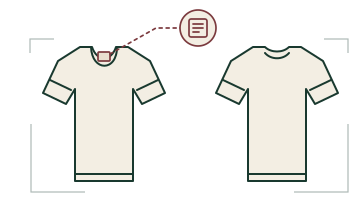
Photos to request before buying a vintage football shirt
A practical photo and question checklist for comparing a listing with the shirt you want to buy.
Read the guide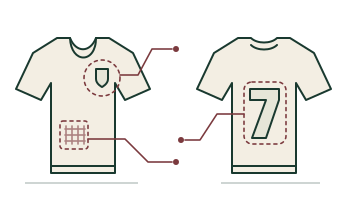
Original guide
Used football shirt condition: fabric, crest, sponsor and nameset
“Good condition” leaves questions open. Record each area, its evidence and what you accept before proceeding.
Read the guide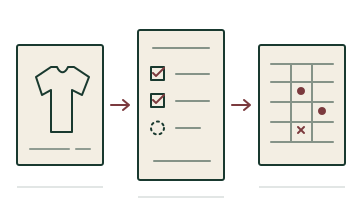
Original guide
How to prepare a vintage football shirt sourcing brief
The right shirt also needs to meet your fit, condition and budget requirements. Organise those limits before starting the search.
Read the guide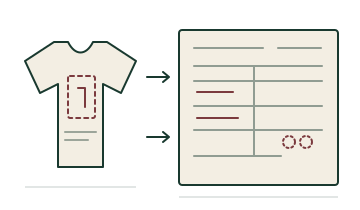
Original guide
A collection record: the shirt, nameset and open questions
One record per item to separate observations, seller statements and what remains unknown. Use it before buying and when agreeing arrival checks.
Read the guide
Original guide
Consolidating jerseys: what to check before sealing the package
A checklist to separate arrived items, unresolved questions and packing decisions before shipping several jerseys together.
Read the guide